More AI-powered content, more business? What are we really measuring?
Artificial Intelligence has transformed the way companies produce content. Today, it’s possible to create articles, posts, and campaigns in much less time. But does producing more content really mean generating more business opportunities?
Imagine that the most-visited article on your company’s website attracts thousands of readers throughout the year but doesn’t generate a single sales meeting. Can we consider it a marketing success?
The answer depends on what we’re measuring.
This concern is shared by marketing professionals around the world. As Artificial Intelligence accelerates content production, so does the need to understand which strategies truly contribute to business results.
Some data on the impact of content marketing
To better understand this reality, GoodFirms conducted the international study “Content Engagement Metrics 2026,” which included participation from SmartLinks and gathered responses from 192 marketing professionals.
The results reveal significant differences between producing content, generating engagement, and achieving business results.
What does the GoodFirms study reveal?
- 75.8% of professionals who prioritize business results reported an increase in leads, compared to 52.4% of the rest.
- 74.4% of heavy AI users reported an increase in leads, compared to 50.9% of other professionals.
- 73.5% of teams that increased content production reported traffic growth—virtually the same figure as teams that produced less content but invested more per piece (73.3%).
The data suggest one conclusion: publishing more does not guarantee better results. It is important to understand for whom we create content, for what purpose, and how we evaluate its impact.
These differences represent associations observed in the study, not direct cause-and-effect relationships.
AI has changed content production. But what about strategy?
According to the same study, 82.6% of professionals already use AI regularly or intensively in their content marketing processes.
The technology allows us to speed up research, structure ideas, adapt formats, and optimize processes. However, it also facilitates the mass production of similar content.
If two competing companies use the same tools with similar instructions, what distinguishes the content they publish?
The difference lies in market knowledge, experience, proprietary data, and the ability to address specific customer problems.
AI can speed up production. But it is the strategy that determines the value of the content.
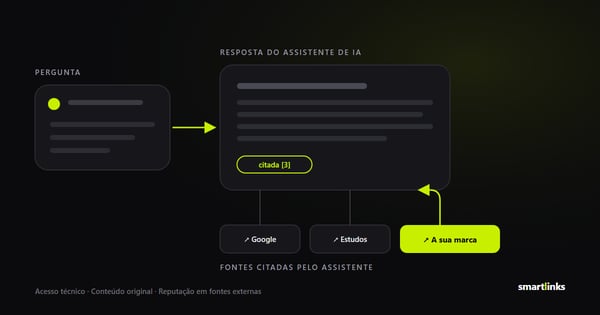
Another important change is that 65.2% of respondents believe that AI-powered search and answer engines have gained importance as distribution channels.
This means that a brand can be discovered through a response from ChatGPT, Gemini, or Google AI Overviews, even without an immediate visit to the website.
Visibility no longer depends exclusively on clicks. A brand’s authority, relevance, and ability to be recognized and cited are becoming increasingly important.
Engagement is not the same as a business opportunity
Views, dwell time, clicks, and shares remain relevant metrics. They help gauge whether content is generating interest.
But they don’t answer the most important question for a B2B company: Is that interest turning into qualified business opportunities?
An article may receive thousands of visits from people who will never be potential customers. In contrast, technical content aimed at decision-makers in a specific industry may attract fewer visitors but lead to meetings with high business potential.
In this context, three key findings from the study stand out:
- 82.6% use AI regularly or intensively in their content marketing processes.
- 75.8% of business-results-oriented professionals report an increase in leads.
- 69.4% of professionals who invest in brand authority report an increase in leads.
How can you link content to business results?
The answer lies in tracking the potential customer’s journey, from their first contact with the brand to a sales meeting.
Relevant content can attract a decision-maker through a Google search, a LinkedIn post, or another channel. That initial contact can lead to a website visit, a request for information, and eventually a meeting.
With CRM tools, such as HubSpot, you can track the source of leads, identify the company’s profile, and monitor the progress of the business relationship.
The goal is to understand which topics, formats, and channels contribute to generating qualified leads.
For SmartLinks, for example, the key metric relates to the qualified sales meetings that actually take place.
This is the point at which the interest shown begins to turn into a concrete sales opportunity.
To this end, it’s worth tracking five metrics:
- Leads by source: Which content and channels generate leads?
- Leads that match the ideal customer profile (ICP): How many correspond to the companies we want to reach?
- Qualified sales meetings held: How many concrete opportunities are being created?
- Visibility in AI responses: Where and with what relevance is the brand mentioned or cited?
- Time to meeting: How long does it take for a lead to develop into a sales opportunity?
None of these metrics should be analyzed in isolation. When combined, they allow us to assess the contribution of content throughout the decision-making process, even when it’s not possible to attribute a meeting to a single article or channel.
AI accelerates production. Strategy drives results.
The GoodFirms study underscores a significant shift in content marketing: efficiency can no longer be measured solely by production volume or the reach of publications.
AI offers companies an extraordinary opportunity to produce better content, gain deeper insights into their audiences, and optimize processes. But it also demands greater differentiation, authority, and discipline in measuring results.
For B2B decision-makers, the key question to ask is simple:
Are we producing content to boost report numbers or to create real opportunities for growth?
The answer should guide our strategy, our investments, and the way we measure marketing success.